

Introduction
Choosing the right ceiling material is crucial for creating a luxurious, functional hotel space. Whether you’re designing a grand hotel lobby or a sophisticated corridor, the ceiling plays a key role in setting the tone. In this post, we’ll explore top materials, with a focus on stainless steel and aluminum ceilings, perfect for hotel lobbies and corridors.
Stainless steel, aluminum, and other metal ceilings are perfect for hotel lobbies and corridors. Stainless steel ceilings1, with finishes like mirror-polished, matte, perforated, and water ripple patterns, provide elegance and durability. Aluminum ceilings2 are lightweight and versatile, while honeycomb panels3 offer excellent sound insulation. These materials enhance both aesthetics and functionality, providing long-lasting beauty and ease of maintenance.

Mirror-Polished Stainless Steel Hotel Ceiling
Now that we’ve introduced the materials, let’s dive deeper into each one’s characteristics, advantages, installation methods, safety considerations, and why they’re ideal for hotel lobbies and corridors. We’ll also explore customization options and expert advice for selecting the best designs.
What is the Best Material to Use for Hotel Ceilings?
Choosing the right material for hotel ceilings is essential, not only for aesthetic appeal but also for durability, safety, and maintenance. For high-end hotel lobbies and corridors, the most commonly chosen materials are stainless steel and aluminum. Both offer elegance, functionality, and longevity, making them ideal for spaces with high foot traffic.
- Stainless Steel is known for its durability and upscale appearance. It resists corrosion and stains, making it an excellent long-term investment for high-traffic areas like hotel lobbies and corridors.
- Aluminum is lighter than stainless steel but still provides strength and versatility. It’s cost-effective and easier to install, making it a popular choice for many hotel designs.
Customization Options for Stainless Steel and Aluminum Ceilings
| Type of Ceiling Tile | Dimensions (mm) | Dimensions (inches) | Thickness (mm) | Material | Finish Options |
|---|---|---|---|---|---|
| Fabricated Stainless Steel Sheets | 1220 x 2438, 1220 x 3048, or Customized | 48 x 96, 48 x 120, or Customized | 0.5 – 3.0 | Stainless Steel (Mirror-polished, Matte, Patterned) | Mirror-polished, Hairline, Satin, Sandblasted, Vibration, Patterned, Anti-fingerprint, Colored |
| Stainless Steel Honeycomb Panels | Custom Sizes (up to 1400 x 6000) | Custom Sizes | 10 mm – 100 mm | Stainless Steel (Aluminum Honeycomb Core) | Mirror-polished, Hairline, Satin, Sandblated, Vibration, Patterned, Colored, AFP |
| Clip-in Aluminum Panels | 300 x 600, 600 x 600, 600 x 1200 | 11.8 x 23.6, 23.6 x 23.6, 23.6 x 47.2 | 0.6 – 0.8 | Aluminum (Alloy 3005, 3105) | Plain, Perforated, Decorative, Acoustic, Fire-rated |
| Perforated Stainless Steel Panels | 1220 x 2438, 1220 x 3048, or Customized | 48 x 96, or Customized | 0.5 – 2.0 | Stainless Steel (Perforated) | Custom Hole Patterns, Various Stainless Steel Surface Treatments |
Why are Stainless Steel Ceilings Popular in Hotel Lobbies and Corridors?
Stainless steel ceilings4 are a hallmark of luxury and modernity, making them ideal for hotel lobbies5 and corridors. They provide a sleek, polished look that enhances the ambiance of the space. With finishes like mirror-polished6, brushed, perforated, and water ripple patterns, stainless steel offers versatility in design.
- Mirror-polished6 stainless steel ceilings create a bright, reflective surface, which can make spaces appear larger and more open.
- Brushed7 or matte finishes provide a more subtle, refined look while reducing the visibility of fingerprints and smudges, making them perfect for high-traffic areas.
- Perforated8 stainless steel ceilings are ideal for spaces that require acoustic control. The holes in the material help absorb sound, making them perfect for lobbies and corridors where noise reduction is key.
- Water ripple effect9 has gained immense popularity in recent years. These patterns evoke the motion of water and can be designed in various styles, such as small, medium, and large ripples, adding texture and dynamism to the ceiling design.
For more information, please refer to our blog post titled “Stainless Steel Ceilings.”

Luxury Hotel Dining Area with Perforated Ceiling

Hotel Lobby with Water Ripple Effect Ceiling
What are Water Ripple Stainless Steel Ceilings and How Are They Used in Hotels?
Water ripple stainless steel ceilings are an innovative and artistic option that adds a fluid, organic look to hotel lobbies and corridors. These ceilings are designed with varying ripple patterns, such as small, medium, and large, and can be used to create a sense of movement and depth.
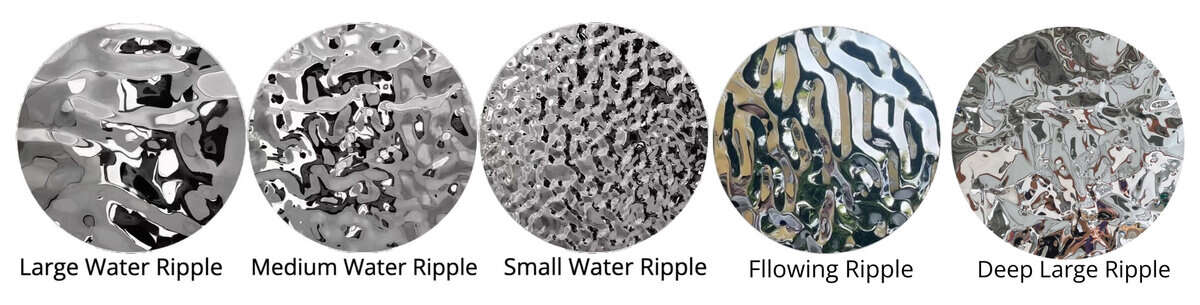
- Small ripples work well in more intimate spaces, while large ripples can fill large hotel lobbies with dramatic effect.
- Deep shallow and deep large ripple designs are perfect for creating visual interest and texture, especially in spaces where the ceiling is a focal point.
- Water ripple ceilings are often chosen for their aesthetic appeal and ability to create a statement piece in hotel interiors.
Note: A design professional or contractor can help you select the perfect rippled stainless steel ceiling panels for your space. They’ll guide you in choosing the right style, size, and finish, and ensure everything is installed properly for a beautiful result.
For more information, please refer to our blog post titled “5 Facts About Water Ripple Stainless Steel Ceilings”.
What are Stainless Steel Honeycomb Panels and How Are They Used for Hotel Ceilings?
Stainless steel honeycomb panels provide a robust, lightweight, and sound-insulating structural solution by combining two metal sheets with an aluminum honeycomb core. The front layer is always made of stainless steel, while the back layer can be crafted from various metals. However, we prefer galvanized steel for the back sheet because it offers excellent strength at a lower cost. These panels deliver superior soundproofing, making them ideal for environments such as hotel lobbies and corridors where effective noise control is essential.

Water Ripple Stainless Steel Honeycomb Panel

Hairline Stainless Steel Honeycomb Panel
- Honeycomb panels are ideal for large spaces, offering lightweight construction without compromising strength. They’re often used in combination with stainless steel for a sleek, modern look while delivering excellent acoustic performance.
- Honeycomb panels are easier to install than fabricated stainless steel sheets thanks to their thickness (10mm and above) and natural flatness. This allows for straightforward installation using a suspension system.
For more information, please refer to our blog post titled “Stainless Steel Honeycomb Panels“.
Why Choose Aluminum Ceilings for Hotel Lobbies and Corridors?
Aluminum ceilings offer a modern, clean, and minimalist aesthetic that fits well in contemporary hotel designs. Lightweight and cost-effective, aluminum is a versatile material that can be molded into a variety of shapes and sizes.
There are several types of aluminum ceilings commonly used in hotel lobbies and corridors:
- Flat Panel Aluminum Ceilings: These provide a sleek, smooth surface, ideal for creating minimalist, modern designs.
- Perforated Aluminum Ceilings: Like perforated stainless steel, these ceilings reduce sound and improve acoustics, making them ideal for spaces that require noise reduction.
- Suspended Aluminum Ceilings: These ceilings are hung from a grid system, offering flexibility in installation and the ability to conceal ductwork and wiring.
- Embossed Aluminum Ceilings: These ceilings offer a textured look and can create a sense of depth, ideal for high-end hotel designs.
Aluminum ceilings are often chosen for their lightweight nature and variety of finishes, including smooth, brushed, and perforated designs. This gives designers a wide range of options to match the hotel’s interior style.
How to Install Stainless Steel and Aluminum Ceilings?
The installation methods for hotel lobby stainless steel ceilings include two primary techniques: Mounting on a Wood Substrate and Suspension Systems. Meanwhile, aluminum ceilings are typically installed using suspension systems only.
Mounting on a Wood Substrate (Stainless Steel Ceilings):
This method involves fixing stainless steel panels on a wood substrate, which is supported by iron frames. It is ideal for achieving a robust structure and allows for the customization of panel arrangements.

Wooden Substrate
Suspension Systems:
- For Stainless Steel Ceilings: Suspension systems typically involve folding-shaped panels with pre-drilled holes designed for easy hanging. These panels are equipped with side hooks to ensure seamless connections with adjacent panels. The panels are securely attached to steel square tubes using self-drilling screws and suspended with M8 threaded rods for stability. Please see the installation instructions below.
Alternatively, a Clip-in System can be used; however, this method is generally limited to standard small-sized panels due to design and weight considerations.


- For Aluminum Ceilings: The installation predominantly relies on the Clip-in System, which is well-suited for lightweight aluminum panels and allows for a clean, seamless appearance. This method is highly preferred for its efficiency and flexibility in creating sleek, modern designs.
Both materials are easy to install, and with the right technical expertise, the installation process can be completed efficiently.
Safety Considerations: Fire Rating of Stainless Steel and Aluminum Ceilings
When designing hotel lobbies and corridors, safety is a top priority. Both stainless steel and aluminum are known for their fire-resistant properties, but their fire ratings may vary based on the thickness and finish.
- Stainless Steel10 is inherently fire-resistant, making it a safe choice for high-traffic areas like hotel lobbies. It doesn’t contribute to fire propagation, making it ideal for meeting fire safety codes.
- Aluminum ceilings11, while generally fire-resistant, can have varying fire ratings depending on the alloy and finish. Anodized aluminum ceilings12 offer higher fire resistance compared to untreated aluminum surfaces.
Always verify the fire rating with the supplier13 and ensure that the material complies with local building codes to guarantee the safety of the space.
How to Choose the Right Ceiling Material Based on Hotel Style?
The material you choose for hotel ceilings should reflect the overall theme and atmosphere of the space. Here’s a quick guide to help you choose based on the hotel’s style:
- Luxury Hotels: For high-end, opulent hotels, stainless steel with a mirror-polished finish or water ripple patterns is ideal. These materials reflect light and create a sophisticated, glamorous look that complements luxurious interior designs.
- Industrial/Urban Hotels: Aluminum or matte stainless steel works well for modern, industrial-style hotels. The raw, minimalist aesthetic is perfect for creating an edgy vibe in urban environments.
- Contemporary/Minimalist Hotels: For hotels with a clean, contemporary design, smooth stainless steel finishes or honeycomb panels can provide a sleek and understated aesthetic.
- Traditional/Classic Hotels: If you’re designing a classic or traditional hotel, consider using wood-look stainless steel finishes or embossed stainless steel panels to add a touch of elegance while maintaining the warm and inviting atmosphere of the space.
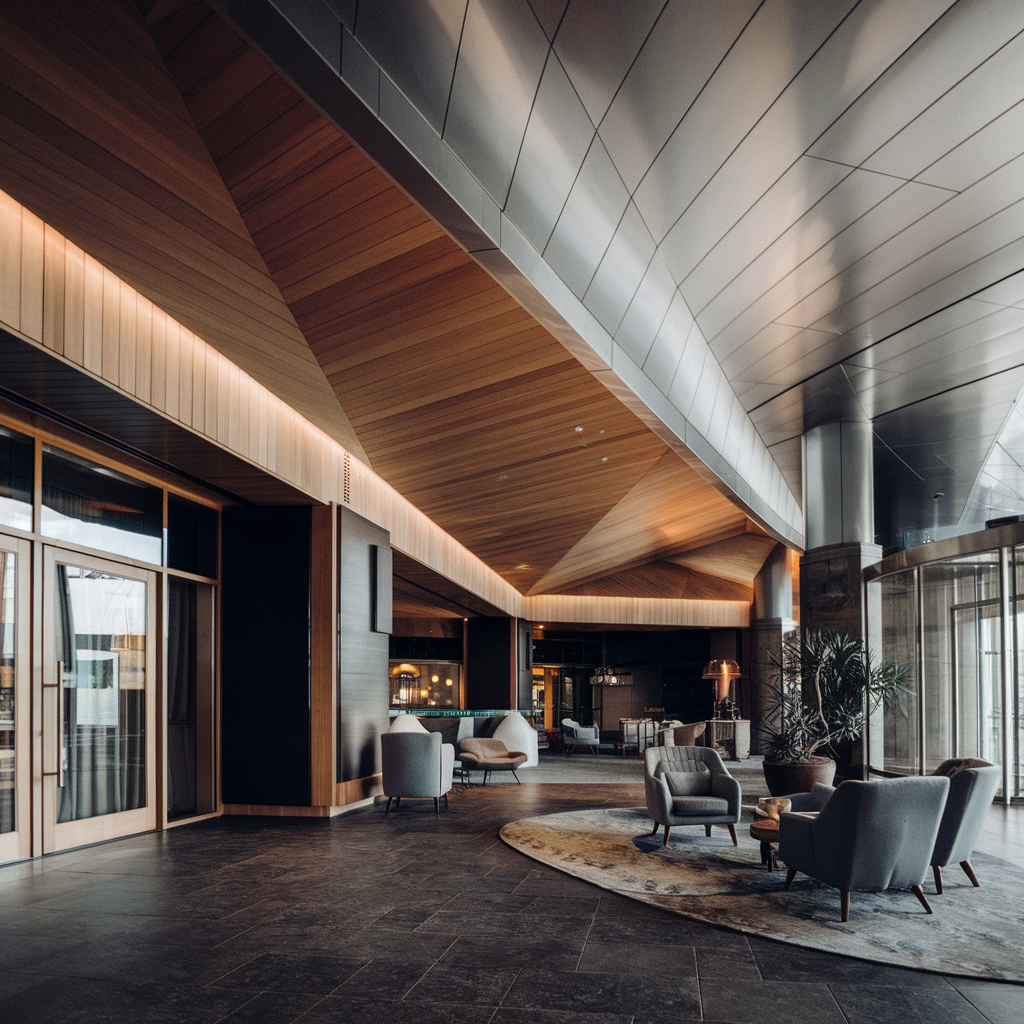
Hote Lobby Matte Stainless Steel Ceiling

Hotel Corridor Water Ripple Effect Ceiling
Summary
Incorporating stainless steel and aluminum ceilings in hotel lobbies and corridors offers both beauty and functionality. With options for finishes, textures, and patterns, these materials can be customized to fit your hotel’s style and safety requirements. For best results, always consult with professional designers to ensure your ceiling design complements the rest of the space.
Contact Vigorss team for free samples or more information today! Please feel free to reach out to us at [email protected] or call us at 0086-13715484114.
FAQ
1. What are the most common materials used for hotel lobby and corridor ceilings?
The most common materials are stainless steel, aluminum, and stainless steel honeycomb panels. Stainless steel is chosen for its luxury look and durability, aluminum for its light weight and flexibility, and honeycomb panels for combining a stainless steel surface with excellent flatness and sound insulation.
2. Which material is best for high-end hotel lobby ceilings?
For high-end lobbies, stainless steel is usually the first choice. Mirror-polished, water ripple, or finely brushed finishes create a premium, reflective ceiling that works very well with marble floors, large chandeliers, and dramatic lighting. Honeycomb panels with stainless steel front sheets are also popular where you need both a luxury look and very flat, large panels.
3. When should I choose aluminum ceilings instead of stainless steel?
Aluminum ceilings are ideal when weight, cost, and easy installation are priorities. Clip-in aluminum panels are very light, simple to install, and good for concealing ductwork and cables. They are widely used in long corridors, secondary lobbies, and areas where you want a clean, modern ceiling but don’t need a strong “luxury metal” statement.
4. What are water ripple stainless steel ceilings and why are they popular in hotels?
Water ripple stainless steel ceilings use embossed patterns that look like moving water. Small ripples suit more intimate areas like corridor nodes or reception niches, while medium and large ripples work well over big lobby spaces. They create a dynamic reflection of light and movement, turning the ceiling into a main visual feature of the hotel.
5. What are stainless steel honeycomb panels and how do they help in hotel ceilings?
Stainless steel honeycomb panels have a stainless front sheet, an aluminum honeycomb core, and a back sheet (often galvanized steel). This three-layer structure makes the panel very flat, light, and stiff. For hotel lobbies and corridors, they offer better sound insulation and easier installation than thin fabricated sheets, especially on large ceiling areas.
6. What finishes are available for stainless steel and aluminum hotel ceilings?
For stainless steel, common finishes include mirror-polished, hairline, satin, sandblasted, vibration, patterned (like water ripple or embossed), and colored surfaces with anti-fingerprint (AFP) options. Aluminum ceilings can be plain, brushed, perforated, embossed, or finished with decorative or acoustic coatings to match the hotel’s interior style.
7. How are stainless steel ceilings usually installed in hotels?
Stainless steel ceilings are mainly installed in two ways:
- On a wood substrate: stainless steel panels are bonded or fixed onto plywood/wood boards that are supported by an iron frame.
- Suspension systems: folding-shaped panels with hooks or pre-drilled holes are connected to steel square tubes and suspended with threaded rods. For small standard sizes, clip-in systems can also be used.
8. How are aluminum ceilings installed?
Aluminum ceilings are typically installed with suspension or clip-in systems only. Lightweight aluminum panels are clipped into a concealed grid, creating a smooth, continuous surface. This makes it easy to access the space above the ceiling for maintenance while keeping a neat look in hotel lobbies and corridors.
9. Are stainless steel and aluminum ceilings fire-safe for hotels?
Both stainless steel and aluminum are non-combustible metals and do not contribute to fire spread. Stainless steel is inherently fire-resistant and is often used where strict fire safety is required. Aluminum ceilings are also fire-resistant, but the exact fire rating depends on the alloy, thickness, and any additional coatings, so it’s important to confirm ratings for each project.
10. How do I choose the right ceiling material based on hotel style?
- Luxury hotels: mirror-polished, water ripple, or high-end patterned stainless steel ceilings work best.
- Industrial or urban hotels: matte stainless steel or aluminum with simple, clean lines fits the concept.
- Contemporary/minimalist hotels: smooth stainless steel sheets or stainless steel honeycomb panels with subtle finishes.
- Traditional/classic hotels: wood-look or embossed stainless steel can bring warmth while still using metal.
11. Are metal ceilings noisy in hotel lobbies and corridors?
Flat, thin metal sheets can reflect sound, but design choices can improve acoustics. Perforated stainless steel or aluminum ceilings combined with acoustic backing, as well as honeycomb panels with their core structure, help absorb noise. This is especially useful in busy lobbies, check-in areas, and long corridors.
12. How can Vigorss support my hotel ceiling project?
Vigorss can recommend suitable materials (stainless steel sheets, honeycomb panels, or aluminum systems), thicknesses, and finishes based on your lobby or corridor design. We can also suggest installation methods, share reference images, and provide free samples so you and your designers can test the look, reflection, and acoustic performance before final selection.
-
To explain the role of stainless steel ceilings in enhancing the design and functionality of spaces like hotel lobbies. This will provide readers with more details on why stainless steel is a preferred material in interior design. ↩
-
This query will help readers understand why aluminum ceilings are lightweight, durable, and ideal for versatile applications in commercial buildings, including hotels. ↩
-
Explains how honeycomb panels improve sound insulation, especially in public spaces like hotel corridors, and their advantages over other materials. ↩
-
Stainless steel ceilings are a popular material choice in architecture for their aesthetics and durability. Clicking the link will explain why they are ideal for spaces like hotel lobbies and corridors. ↩
-
The design of hotel lobbies and corridors plays a major role in creating a welcoming atmosphere. This link will explain the role of ceiling designs in enhancing these spaces. ↩
-
Mirror-polished finishes are used to create reflective surfaces that improve spatial perception. The link will explain the effect of mirror-polished finishes in interior design. ↩ ↩
-
Brushed finishes offer a subtle and practical aesthetic, making them ideal for high-traffic areas. This link will highlight the benefits of brushed stainless steel. ↩
-
Perforated stainless steel ceilings are often used for their sound-absorbing properties. Clicking this link will give readers insight into how they reduce noise in spaces. ↩
-
The water ripple effect creates dynamic ceiling designs. This link will show how this pattern is applied in modern architectural spaces for aesthetic and textural impact. ↩
-
Learn about the inherent fire-resistant properties of stainless steel to ensure safety. ↩
-
Understand the fire ratings of aluminum ceilings based on their alloy and finish. ↩
-
Discover why anodized aluminum offers better fire resistance compared to untreated aluminum. ↩
-
Ensure the chosen materials comply with safety codes by verifying their fire ratings. ↩


