

Two Key Types of Stainless Steel Ceilings You Need to Know
When selecting the right stainless steel ceiling for your project, understanding the two main options—stainless steel sheet panels and honeycomb panels—can help you make the best choice. Both offer durability and style, but with distinct advantages based on your project’s specific needs.
1. Stainless Steel Sheet Panel Ceilings: A Sleek, Durable, and Cost-Effective Choice
Stainless steel sheet panel ceilings offer a modern, durable, and cost-effective option for various interior spaces. These ceilings are versatile, adding elegance to both commercial and residential projects.
Mirror-Polished Stainless Steel Sheet Panels
For spaces that require a sense of luxury and openness, mirror-polished stainless steel sheet panels deliver a stunning visual effect. Their highly reflective surface enhances natural light and creates an illusion of larger, more open spaces. These panels are not only ideal for commercial environments such as hotel lobbies, office buildings, and upscale retail spaces, but they also work beautifully in residential interiors, especially in sitting rooms, where they add a sophisticated, contemporary feel.


Brushed Stainless Steel Sheet Panels
For spaces that require a more subtle, professional atmosphere, brushed stainless steel panels offer understated elegance. The matte finish provides a sleek and modern appearance, perfect for offices, restaurants, and residential interiors. It also has the added benefit of resisting fingerprints, making it a practical choice for high-traffic areas.

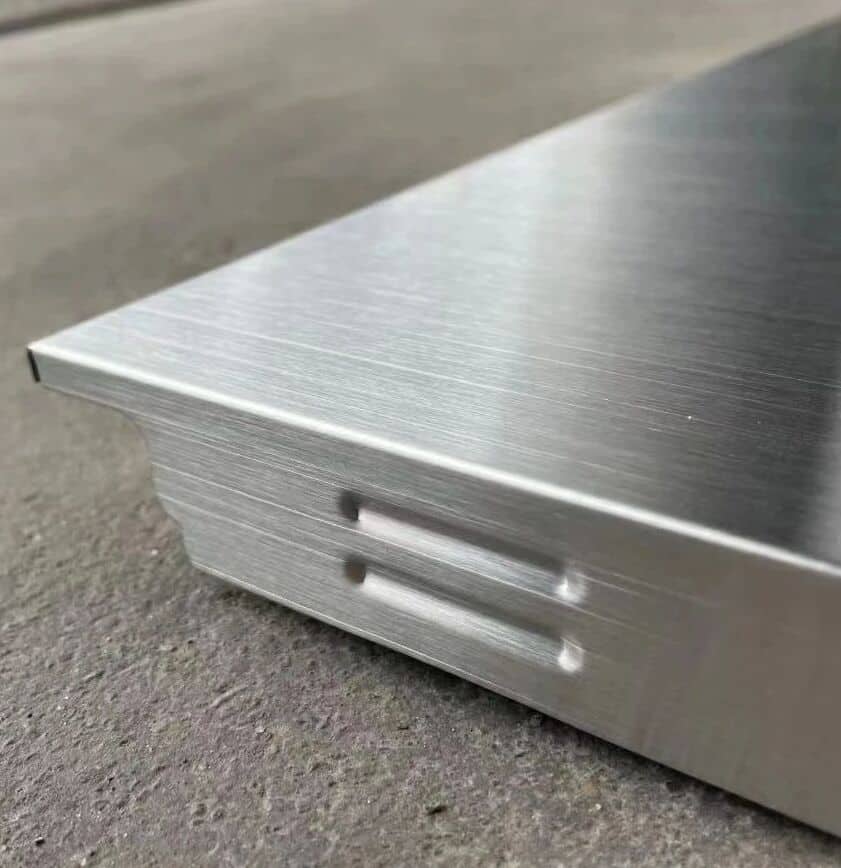
Water Ripple Pattern Stainless Steel Sheet Panels
Want to add some visual interest and texture to your ceiling design? Water ripple pattern panels introduce an artistic flair that plays with light and shadow. This bold choice is ideal for creative spaces like galleries, upscale restaurants, or modern showrooms, creating a striking and memorable design.

The three most popular ripple patterns for ceiling panels are medium, large, and flowing. These panels can also be customized in a range of colors—such as gold, rose gold, black, and blue—offering enhanced design flexibility to suit any project.
For more details about water ripple ceilings, please refer to our other post: 5 Facts About Water Ripple Stainless Steel Ceiling.
Why Choose Stainless Steel Sheet Panels?
• Durability: Although lighter than honeycomb panels, stainless steel sheet panels are equally durable, making them suitable for both small and large spaces.
• Cost-Effective: Sheet panels are a more budget-friendly option, offering high-end aesthetics and durability without the added cost of honeycomb panel construction.
• Lightweight: Their lighter structure makes installation quicker and easier, reducing overall project timelines and labor costs.
2. Stainless Steel Honeycomb Panel Ceilings: Strength Meets Style
For projects that require superior structural integrity and strength, stainless steel honeycomb panel ceilings are an excellent choice. While these panels are heavier and more expensive than sheet panels, their three-layer design provides unmatched stability, making them ideal for large-scale commercial installations.
Honeycomb Panel Structure Explained


The honeycomb panel consists of three key layers:
• Front layer: Stainless steel sheet that can feature any finish—mirror-polished, brushed, or water ripple—providing aesthetic versatility. The recommended thickness is between 0.8mm and 1.5mm, depending on project requirements and budget.
• Core: The aluminum honeycomb core adds significant structural strength, allowing the panel to cover large areas without sacrificing durability.
• Bottom layer: A galvanized steel sheet that adds additional reinforcement and rigidity, ensuring the panel holds up in demanding environments. The suggested thickness falls between 0.8mm and 1.0mm.
Honeycomb panels are commonly used in large spaces like airports, shopping malls, and transportation hubs, where long spans of ceiling need to be supported without the risk of sagging or warping.
Surface Treatments Available for Honeycomb Panels
Like sheet panels, honeycomb panels come with various surface treatments, including mirror-polished, brushed, and water ripple patterns. While they offer the same visual appeal as sheet panels, honeycomb panels provide extra strength, making them ideal for spaces requiring both aesthetics and robustness.

Why Choose Stainless Steel Honeycomb Panels?
• Structural Strength: Thanks to their layered design, honeycomb panels can cover large areas with minimal support, making them perfect for high-traffic or high-stress environments.
• Durability: The combination of a stainless steel face and aluminum core ensures long-lasting performance in even the most demanding spaces.
• Aesthetic Flexibility: Available in the same finishes as sheet panels, honeycomb panels allow you to achieve the desired look while maintaining structural integrity.


Both stainless steel sheet panel ceilings and honeycomb panel ceilings are durable and stylish, but the best choice depends on your project’s specific needs. If you’re working with a tight budget and need a lightweight solution, stainless steel sheet panels are an excellent choice. On the other hand, for large, demanding environments that require extra strength and stability, honeycomb panels provide the perfect solution without compromising on aesthetics.
Installation Techniques for Stainless Steel Sheet Panels
Choosing the right installation method for stainless steel sheet panels is essential for ensuring both durability and aesthetics. Here are three common methods:
Direct Adhesion to the Ceiling Surface
This quick and straightforward method involves adhering the stainless steel sheet panels directly to the ceiling. It’s a time-efficient option, ideal for smooth indoor surfaces. However, with textured panels like water ripple patterns, the seams between panels may become more noticeable.


Mounting on a Wood Base Support
For enhanced stability and a seamless look, stainless steel sheet panels can be mounted on a wooden base. The installation steps are as follows:
- 1. Fix a wooden board (8-10mm thick) to the ceiling.
- 2. Cut grooves in the wood to match the size of the stainless steel sheets.
- 3. Fold the edges of the water ripple sheets 90 degrees to the back.
- 4. Apply structural adhesive to the back of the sheets and affix them to the wood, leaving appropriate gaps for the design.
- 5. Support the panels with wooden strips until the adhesive dries (approximately 12 hours).
This method offers a durable foundation and a clean finish, making it perfect for high-traffic areas.
Suspension Systems for Larger Spaces
A suspension system is ideal for large commercial spaces like malls and offices, providing secure support and easy access to utilities above the ceiling.
Stainless steel sheet panels can be installed using one of two primary suspension methods, depending on the project requirements:
Four-Side Folded Water Ripple Ceilings
This method is commonly used for water ripple panels to prevent visible gaps during installation. The panels are shaped with pre-drilled holes for hanging and hooks on the sides for connecting adjacent panels. Smaller dimensions, like 1000mm x 1000mm, are often recommended for easier installation and better alignment.


Spring Tee or Carrier System
This more complex method is suitable for all types of stainless steel sheet ceilings, but requires more detailed work compared to honeycomb panel installation. It involves fabricating the four sides of the sheet panels to integrate with a spring tee or carrier system, ensuring tight connections between panels. If you’re looking for a simpler installation process, honeycomb panels are a more straightforward option.


Installation of Honeycomb Panel Ceilings: Heavier, Yet Simple to Install
While honeycomb panels are heavier than standard sheet panels, their installation is remarkably simple due to their pre-fabricated design. This makes them a popular choice for large-scale projects where strength and quick installation are priorities.
Step-by-Step Installation Process for Honeycomb Panels
- 1. Begin by installing the main load-bearing tracks.
- 2. Install the second layer of tracks using threaded rods for added support.
- 3. Connect two honeycomb panels using a steel plate and secure them with M4 screws.
- 4. Attach Z-shaped steel profiles with pre-drilled holes to the back of each honeycomb panel.
- 5. Fix the honeycomb panels to the secondary tracks by securing the threaded rods and Z-shaped profiles.
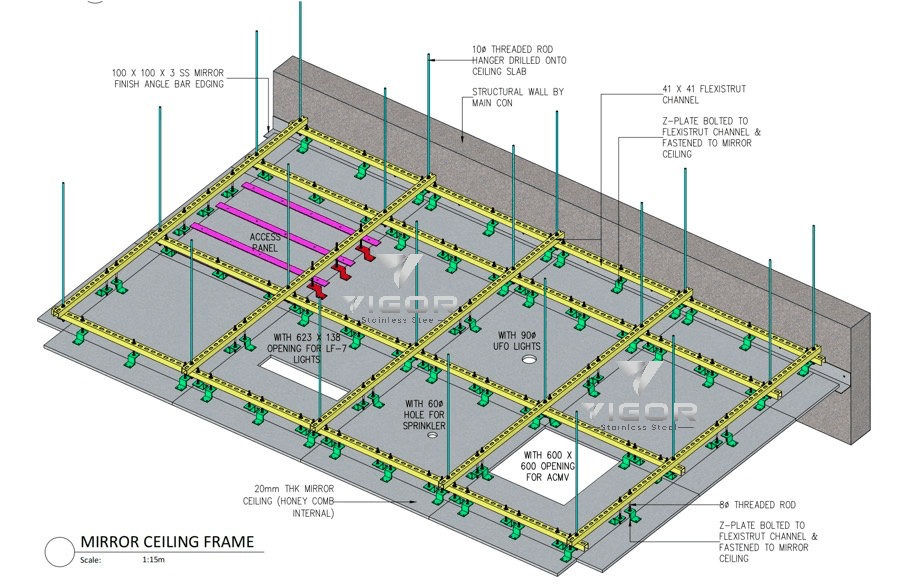

This method provides a fast, strong installation, perfect for projects where time and durability are crucial. With no need for additional fabrication, honeycomb panels offer a hassle-free solution for large commercial spaces.
For more details about honeycomb panels, please refer to our other post: Discovering the Power of Stainless Steel Honeycomb Panels.
Stainless Steel vs. Aluminum Ceilings: Which is Better for Your Project?
When choosing between stainless steel and aluminum for your ceiling, it’s important to consider factors like durability, aesthetics, and maintenance. Here’s how they stack up:
Durability: Stainless Steel Takes the Lead
Stainless steel excels in durability, offering resistance to corrosion, rust, and heat. It’s ideal for high-traffic or humid areas like commercial kitchens or public spaces. Aluminum, while lightweight, is more prone to dents and scratches, making it less durable in demanding environments.
Aesthetic Appeal: Stainless Steel Offers More Variety
Stainless steel provides a wider range of finishes, including mirror, brushed, embossed, etched, and water ripple. These finishes offer more design flexibility, from luxurious mirror-polished surfaces to artistic water ripple textures. Aluminum tends to have more basic, matte finishes, offering less variety in design.
Strength-to-Weight Ratio: Honeycomb Panels for Both Materials
Both stainless steel and aluminum are available in honeycomb panels, featuring a three-layer structure: a core of aluminum and two outer layers. The main difference is the face material—stainless steel for a more durable, sleek finish or aluminum for lighter projects. Stainless steel honeycomb panels offer greater durability, while aluminum honeycomb panels are lighter but still strong.
Maintenance and Longevity
Stainless steel is low-maintenance, easy to clean, and keeps its polished appearance over time, making it perfect for environments requiring frequent cleaning. Aluminum also requires maintenance but tends to tarnish or dull faster, especially in high-exposure areas, increasing upkeep costs.

In conclusion, stainless steel is the better choice for projects needing durability, a wide range of finishes, and long-lasting performance. Aluminum can be a suitable option for lightweight applications but lacks the resilience and aesthetic variety of stainless steel.
The Future of Stainless Steel Ceilings in Modern Architecture
As demand grows for durable and eco-friendly materials, stainless steel ceilings are increasingly becoming a staple in both interior and exterior design. Their versatility, strength, and aesthetic appeal make them ideal for a wide range of applications in contemporary architecture.
A Versatile Material for Various Applications
Stainless steel ceilings are adaptable to virtually any project, whether it’s a sleek, high-end commercial space or a practical public infrastructure project. From luxury hotel lobbies and corporate offices to airports and train stations, the material’s resilience and range of finishes make it a preferred choice across industries. Its ability to seamlessly blend function with style allows it to suit both modern and industrial design aesthetics.
How to Stay Ahead of Design Trends
To remain competitive in today’s architectural landscape, it’s essential to incorporate materials that are not only visually appealing but also sustainable and durable. Stainless steel ceilings meet these needs, offering both beauty and longevity. Architects and designers are increasingly turning to stainless steel due to its ability to future-proof projects with its low maintenance, recyclability, and long-lasting performance.
By choosing stainless steel ceilings, professionals can stay ahead of the curve, ensuring their designs remain timeless while meeting the environmental and functional demands of modern construction.

Conclusion
Stainless steel ceilings are rapidly becoming a key element in modern architecture, offering unmatched durability, aesthetic variety, and sustainability. Whether you’re working on a luxury commercial space or a large-scale public infrastructure project, stainless steel ceilings provide a versatile solution that enhances both function and design. As architects and designers increasingly prioritize eco-friendly and long-lasting materials, stainless steel will continue to be a preferred choice for shaping the future of interior and exterior spaces.
Ready to elevate your next project with premium stainless steel ceilings? Contact Vigorss team for free samples or more information today! Please feel free to reach out to us at [email protected] or call us at 0086-13715484114.
FAQ
1. What are the main types of stainless steel ceilings?
There are two main types: stainless steel sheet panel ceilings and stainless steel honeycomb panel ceilings.
Sheet panels are lighter and more cost-effective, ideal for small to medium spaces. Honeycomb panels use a three-layer structure (stainless steel face, aluminum honeycomb core, galvanized back sheet) to achieve higher strength and better flatness for large commercial areas.
2. When should I choose sheet panel ceilings instead of honeycomb panels?
Choose sheet panels when:
- The area is small or medium-sized (shops, restaurants, offices, residential interiors).
- Budget is tighter but you still want a premium metal ceiling.
- You prefer lighter panels that are faster and easier to install.
They give a modern, high-end look without the extra cost and weight of honeycomb panels.
3. When are stainless steel honeycomb panel ceilings the better option?
Honeycomb ceilings are ideal for large-span and high-traffic spaces, such as airports, shopping malls, transportation hubs, big lobbies, and public halls. The aluminum core gives excellent rigidity and flatness, so panels stay straight and stable even over long distances, with minimal risk of sagging or deformation.
4. What surface finishes are available for stainless steel ceilings?
You can choose from:
- Mirror-polished for a luxurious, reflective, high-impact look.
- Brushed for a calm, professional, low-glare feel.
- Water ripple for artistic, dynamic reflections.
All three can be applied on both sheet ceilings and honeycomb ceilings, depending on the project’s design and budget.
5. Where are mirror-polished stainless steel ceilings most suitable?
Mirror-polished ceilings are perfect for luxury spaces that need a “wow” effect, such as hotel lobbies, upscale retail stores, casinos, and statement residential areas. They reflect light and surroundings, visually increasing height and openness while creating a strong, premium impression.
6. Why are brushed stainless steel ceilings popular in commercial projects?
Brushed ceilings offer understated elegance with a softer reflection. They are widely used in offices, restaurants, corridors, and residential spaces that need a modern but not overly shiny ceiling. The brushed texture also helps disguise minor marks and makes the ceiling look clean under different lighting conditions.
7. What makes water ripple stainless steel ceilings special?
Water ripple ceilings create a three-dimensional, flowing effect that plays with light and shadow. Medium, large, and flowing ripple patterns turn the ceiling into a design feature, making them ideal for galleries, high-end restaurants, bars, hotel lobbies, and showrooms where you want a strong visual identity.
8. What are the main installation methods for stainless steel sheet ceilings?
There are three common methods:
- Direct adhesion – panels are glued directly to a flat ceiling; best for small, simple indoor areas.
- Mounting on a wood base – panels are folded and bonded to plywood fixed on tracks; ideal for special shapes and high-traffic areas where a solid base is needed.
- Suspension systems – panels are hung from a steel framework; suitable for larger spaces and for ceilings that need access to MEP services above.
9. How are water ripple sheet ceilings usually installed?
For water ripple sheets, four-side folding with pre-drilled holes and hooks is common. Panels are hung from a suspension system or fixed on a wood base with designed gaps. This method helps control seams, keep alignment tidy, and avoid obvious gaps between panels, especially for reflective mirror finishes.
10. Are honeycomb panel ceilings difficult to install?
No. Although the panels are heavier, their pre-fabricated design actually makes installation simple. Installers fix the main tracks, then secondary tracks, and hang the honeycomb panels using Z-shaped profiles and screws. There is no need for extra panel fabrication on site, which saves time on large projects.
11. How do stainless steel ceilings compare with aluminum ceilings?
Stainless steel offers higher durability, better scratch resistance, and more finish options (mirror, brushed, water ripple, embossed, etched). Aluminum is lighter and cheaper but easier to dent and usually has fewer decorative options. Stainless steel is a better choice for high-end, high-traffic, or humid environments where long-term performance matters most.
12. How can Vigorss support my stainless steel ceiling project?
Vigorss can help you:
- Choose between sheet and honeycomb ceilings based on span, budget, and design.
- Select suitable finishes (mirror, brushed, water ripple) and thickness ranges.
- Suggest installation methods for your site conditions.
- Provide free samples and technical details so your designers, contractors, and clients can make decisions with confidence.


