

Quick Take—Why I Recommend Inco Coloring for Exterior Facades
Built-in color, not a coating
Inco coloring thickens the chromium oxide layer on the stainless steel sheet itself. No dyes, no pigments.
UV + weather performance you can trust
The color is created through light interference, allowing it to form quickly during the process and remain unaffected by UV or weather conditions.


What Is Inco Coloring?
Who invented it?
We get this a lot: the Inco coloring method originated at the Research and Development Centre of Inco Europe Ltd. in Birmingham. That’s why many of us still call it the “Inco method.”
H3 How Inco makes color (like a prism, thin oxide film)
Look at the image: white light in → colored light out. Adjust the reflection angle, color will change.

As we said in Quick Take, Inco coloring grows an extremely thin, colorless, transparent chromium-oxide film on stainless. This film makes light interference, like a small prism.
Color depends on four things: surface polish, film composition and thickness, the environment, and the viewing/lighting angle. On flat or bent panels, the angle keeps changing, so you see a soft iridescent shift—many people call it a color illusion. If we control film thickness in different areas, we can make gradient effect. The color is stable in sun and rain.
Production Process
Electrochemical coloring
Immerse sheets in hot solution with chromic acid and sulfuric acid, apply controlled current. A thin chromium-rich oxide grows; different thickness generates different color. The thickness of the oxide layer ranges from 0.02μm (producing a bronze color) to 0.36μm (producing a green color)

Hardening + rinse
Do hardening step for better wear, then rinse well to stop the reaction.

Drying by IR
Use IR drying for fast, even dry without water marks.

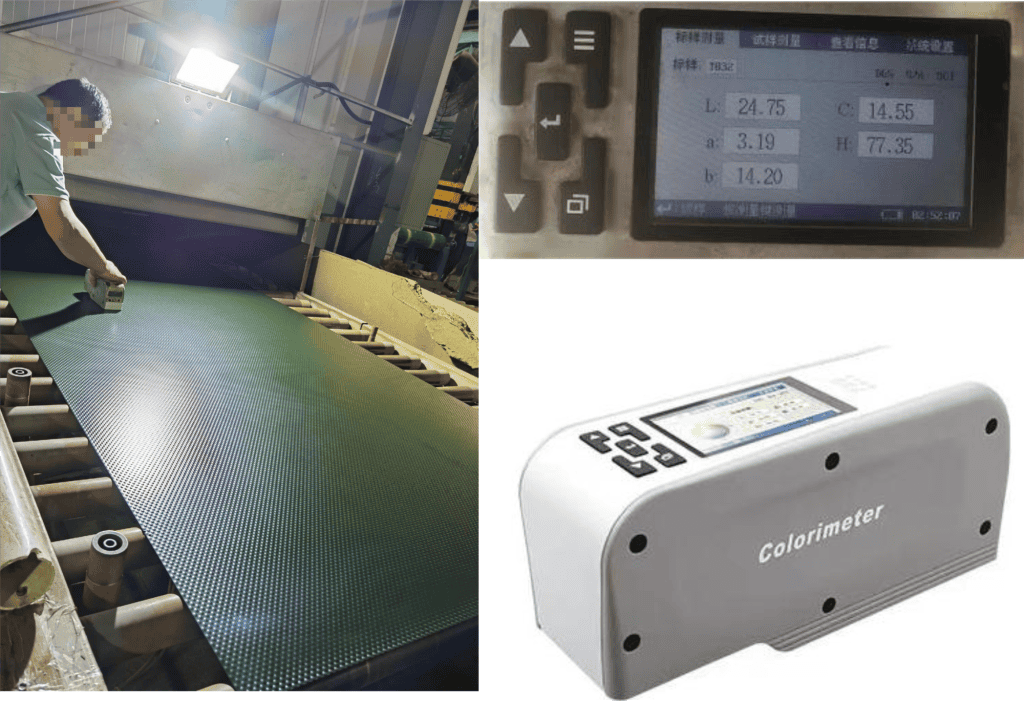
QA: color check & records
Check color with a colorimeter, log ΔE values, and match panels to the approved mockup.
H3 Why that matters to your facade
Color is inside the passive layer
Inco does not add paint or pigment. The process only thickens the natural chromium-oxide film. You keep stainless steel’s corrosion resistance.
No organic binder
Nothing to get brittle, chalk, peel, or fade in UV. Color comes from light, not dye.
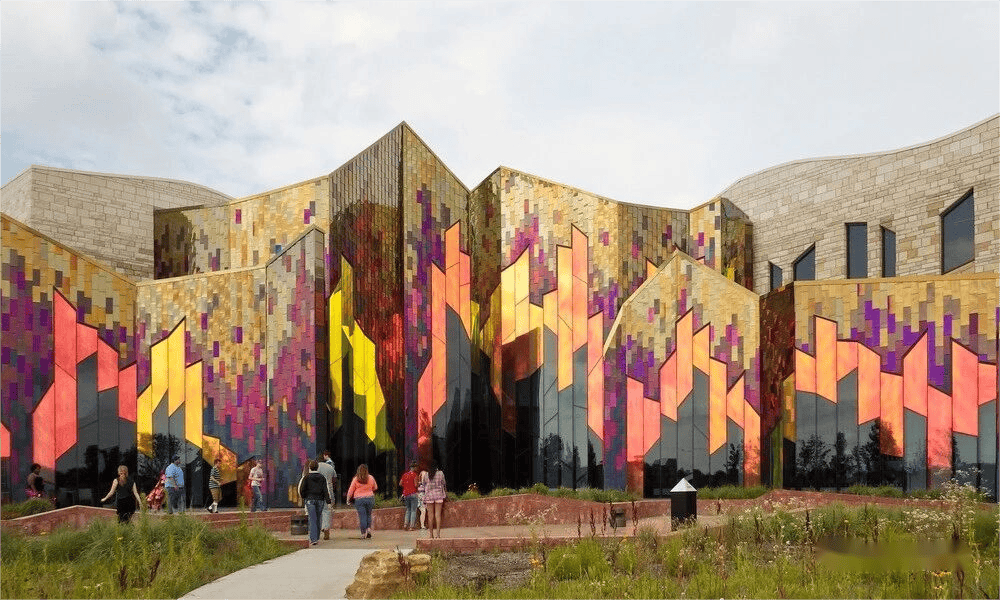
Special iridescent look
The Inco process creates a natural iridescent look by controlling the oxide film at the nanometer level. The color shifts gently with light and angle, giving façades a vibrant, dynamic appearance without any dyes or coatings. At present, this is the only coloring method that can produce a true iridescent finish.
Best with austenitic grades
Austenitic stainless (304/316) makes a very uniform passive film. We can control the film thickness in nanometer level, so color is clean and stable.
Proven long life
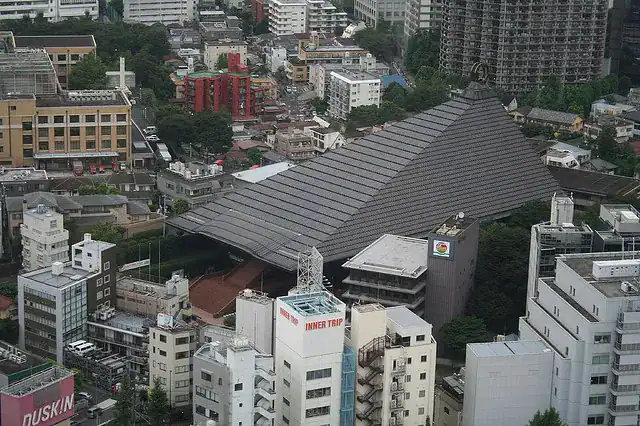
We can offer 10-year appearance guarantee with correct grade and detailing. Example: Reiyukai Shakaden Temple, Tokyo (built 1975). About 18,500 m² of black Inco-colored stainless on roof and wall still keeps stable color.
What this means for you
Strong UV and weather resistance, low maintenance. Use 304 inland; use 316 near sea or industry.
H2 Inco Coloring vs PVD vs Paint/PVDF/Powder Coat vs Electroplating
(All information in a single, easy-scan table for your team)
| Attribute | Inco Coloring | PVD Coating | PVDF / Painting | Electroplating |
|---|---|---|---|---|
| Color mechanism | Transparent chromium-oxide film is thickened; light interference makes color inside passive layer. | Vacuum-deposited metallic thin film; color sits in the coating. | Pigmented organic film applied and oven-cured; depends on primer/surface prep. | Metallic layer added to stainless; look comes from that metal. |
| Color stability (UV) | Color does not change in sun or weather; angle/curving can change apparent hue (iridescence). | Angle does not change color; very stable visual and scratch-resistant. | Paint life depends on system and exposure; plan for eventual repaint/remove. | Appearance changes with weathering |
| Adhesion risk | Integral to substrate (very low peel risk) | Only some colors are durable, and fading may occur | Adhesion is the key risk | Can scratch/abrade at defects |
| Heat resistance | Up to ~200°C | 150°~200°C | up to ~150 °C | up to ~200 °C |
| Color range | Bronze → gold → red → purple → blue → green by film thickness; ferritic mostly dark grey. | Gold/rose gold/blue/grey/green/pink/violet/bronze/black and more; very uniform. | Very wide color and gloss choices (industrial). | Black, copper, bronze, etc |
| Outdoor use | Very suitable, 30-year reports on roofs | Only stable colors like gold and rose gold are suitable | Repaint over time | Look changes with weathering |
| Fabrication | You can fabricate after coloring; bends might thin the film at edge (slightly lighter). Do not weld visible faces | Bends thin the coating; poor processing may cause peeling; weld before coating or welding out-of-sight areas | Needs roughening and primer; cleanliness critical. | Normal sheet forming; repaint over tin easy; joining like bare SS (depends on system). |
| Cost (life-cycle) | Higher first cost; low maintenance; no repaint. | Medium first cost; long life with correct detailing. | Medium first cost; highest risk of repaint/maintenance. | Low first cost; risk of maintenance. |
Extra Inco notes for your spec (short)
- Fabricate after coloring is OK; bend edges may look a bit lighter because film gets thinner.
- Do not weld on visible colored faces; heat ruins the surface. If welding/brazing is needed, do it on hidden areas.
- Soldering with special solders/fluxes is possible; adhesive bonding is fine if cure temperature is low; screws, rivets, clamps all OK.
Tip from Vigorss: if you want long-life color without paint headaches, Inco is strong for external cladding, canopy, podium.
H2 Project Cases: From Landmark Curves to Iridescent Facades
We always believe real projects speak louder than theory. Here we share two cases where Inco-colored stainless steel was used for outdoor wall cladding and facade.
Shenzhen Science and Technology Museum Facade
Material: 316L Stainless, Inco grey color, 6WL pattern


Gansu Jingtai Water Conservancy Museum External Cladding
Material: 316L stainless, inco sea blue color, ripple pattern


Both projects prove that Inco coloring gives stable color, low maintenance, and strong visual effect even under very different climates.
Conclusion
Inco coloring gives stainless steel a natural, stable, and beautiful color that lasts. The process makes the oxide film thicker, so the color is part of the steel itself, not paint that fades or peels. With right grade, like 304 inland or 316 near sea, stainless steel exterior wall panels can resist sun, rain, salt, and pollution for decades. Many projects already prove the value, from temples to museums to modern tech centers.
For designers, contractors, and owners, it means low maintenance, long life, and unique iridescent effect. If you want reliable color and strong performance, Inco coloring is the smart choice. Contact Vigorss team for free samples or more information today: [email protected] | 0086-13715484114.
FAQ
1. What is Inco-colored stainless steel cladding?
Inco-colored cladding is stainless steel that has been treated by an electrochemical process to thicken its natural chromium-oxide film. The color comes from light interference inside this transparent film, not from paint or pigments. That means the stainless steel keeps its original corrosion resistance while gaining a stable, durable color.
2. How does Inco coloring create an iridescent effect on facades?
The Inco process grows a very thin oxide layer on the stainless surface. When white light hits this layer, different wavelengths interfere and create color that changes slightly with viewing angle and panel curvature. On curved or folded facades this produces a gentle, natural iridescent shift instead of a flat, “printed” color.
3. How is Inco coloring different from PVD coating for outdoor facades?
Inco thickens the passive layer of the stainless itself, so the color is inside the metal’s oxide film and cannot peel like a coating. PVD adds a metallic coating on top of the steel, which can give very uniform colors but behaves more like a surface film. For long-term exterior use with strong UV and weather, Inco focuses on stability and low peel risk, while PVD is often chosen for more solid, non-iridescent colors.
4. How does Inco compare with paint, PVDF, or powder coating?
Paint and PVDF systems rely on organic binders that can chalk, fade, or crack under UV and weather, so they eventually require repainting. Inco has no organic layer; the color is purely optical, inside the oxide film. This gives very high UV stability and removes the need for future repainting if the correct grade and detailing are used.
5. Why is Inco coloring especially suitable for exterior use?
Because the color is part of the passive layer, it does not fade under sunlight or wash away in rain. There is no pigment or binder to degrade, so facades keep a stable appearance for decades with only basic cleaning. This makes Inco a strong choice for landmark buildings, roofs, and cladding in harsh climates.
6. Which stainless steel grades are recommended for Inco-colored facades?
Inco works best on austenitic stainless steels such as 304 and 316, because they form a uniform passive film that can be controlled at nanometer level. 304 is usually chosen for inland projects, while 316 or 316L is recommended for seaside, industrial, or highly polluted environments where corrosion resistance must be higher.
7. What color range can I achieve with Inco coloring?
By adjusting the oxide film thickness, Inco can produce a range from bronze and gold through red, purple, blue, and green. On ferritic grades the result is mostly dark grey. The tone is clean and metallic, not “paint-like,” and curved or folded surfaces can show a subtle gradient or iridescent effect.
8. Can I fabricate panels after Inco coloring (bending, cutting, etc.)?
Yes, sheets can be fabricated after coloring. Bending is allowed, but the oxide film becomes slightly thinner at tight bend lines, so edges may look a bit lighter. Visible welding on the colored face should be avoided because heat destroys the surface; any welding or brazing should be kept to hidden areas.
9. How long can an Inco-colored facade last in real projects?
With the right stainless grade and good detailing, Inco-colored facades can keep a stable appearance for decades. A classic example is the Reiyukai Shakaden Temple in Tokyo, built in 1975 with around 18,500 m² of black Inco-colored stainless steel on roofs and walls, which still shows consistent color after long-term exposure.
10. Where can Inco-colored stainless steel be used on a building?
It can be used for exterior wall cladding, roofs, canopies, podiums, soffits, and even interior feature ceilings or walls that continue the facade language inside. Because of its UV stability and corrosion resistance, it is especially suitable for high-visibility areas where owners want a strong visual impact with low maintenance.
11. What are the maintenance and life-cycle cost advantages of Inco-colored cladding?
Inco may have a higher initial material cost than some coated systems, but it does not need repainting or color renewal. Routine cleaning with water and mild detergent is usually enough, and there is no risk of large-scale peeling. Over the building’s life, this can mean lower maintenance costs and fewer disruptions for owners.
12. Is Inco coloring suitable for complex shapes and curved facades?
Yes. Inco-colored stainless steel can be formed into curves, folds, and three-dimensional shapes that are common in modern architecture. The changing angles on complex surfaces actually enhance the color-shift effect, giving the facade a dynamic look as light and viewing position change.


